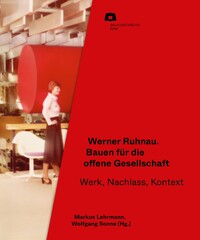
Werner Ruhnau (1922-2015) ranks among the great architects of the German post-war period. His theater buildings in Münster and Gelsenkirchen were central to the establishment of his fame. Here, he combined architecture with the visual and performing arts, and thus made a lasting contribution to the widening of the concept of art and spatiality. In addition to his architectural achievements, Ruhnau’s diverse oeuvre encompasses a broad range of fields including art, urban planning, and community activities. He frequently embraced a process-based, participatory approach to the creation of his buildings: they are testimonies to transparency, openness, variability, and the integration of the arts. He was a pioneer in highlighting the now well-known problems of modern society and its way of life, investigating climatic and spatial conditions and addressing socio-cultural topics to encourage an open society. This publication explores Ruhnau’s oeuvre in detail based on the contents of his estate from the Baukunstarchiv NRW. One focus is on his progressive theater buildings, above all today’s Musiktheater im Revier in Gelsenkirchen. He had to overcome considerable resistance in order to realize these projects in the restorative and highly conservative era of the 1950s. In the design of the Musiktheater im Revier, Ruhnau was inspired by the principles of medieval cathedral builders and transposed them into the modern age. Many of his key ideas are reflected in his most famous building: his philosophy of immateriality, the climatization of space, the integration of the arts, and the dissolution of the boundaries between the interior and exterior.