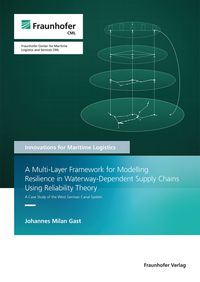
Disruptions to waterway infrastructure like lock closures impose substantial economic costs. Their effect on supply chain resilience, however, remains limited. This dissertation develops a multi-layer, multi-state resilience model for waterway-dependent supply chains grounded in reliability theory, linking the infrastructure, transportation, supply chain and industry layers. Using the West German canal system as a case study, the model quantifies the system-wide cost of infrastructure disruption (about seven million euros per day) and evaluates mitigation strategies such as modal shift and warning time. Furthermore, this dissertation identifies the novel "shuttling effect", a cyclical phenomenon that is distinct from the ripple effect. The effect arises from repeated short-term capacity constraints in shared, capacitated infrastructure.